

PROJECT OVERVIEW
PROJECT DETAILS
- Category Digital Humanities, Materialities
- Project duration: January 2022 until June 2025
- Project lead: Christina Antenhofer and Ingrid Matschinegg
- Project realisation: Walter Brandstätter (Historian) and Stefan Zedlacher (Architect)
Hohensalzburg digital
Making historical data on material culture and spaces accessible
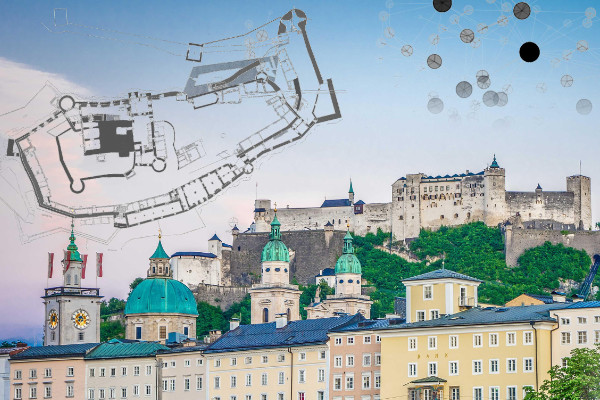
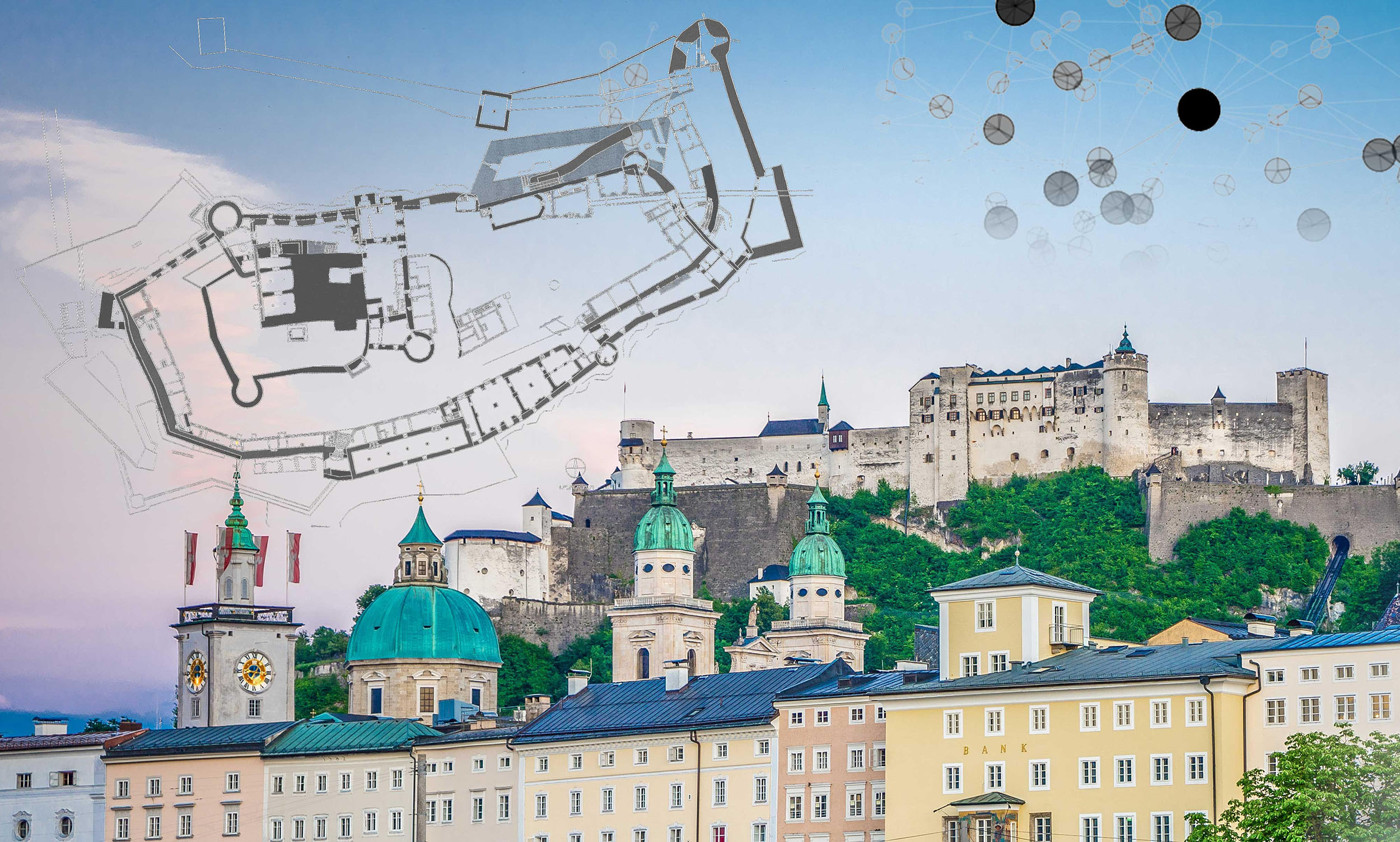
Hohensalzburg Fortress is one of the most important buildings in the federal state of Salzburg and far beyond. As part of the call for Digital Humanities projects from the government of Salzburg, work has been underway since the beginning of 2022 to digitally catalogue previously little-known data and make it available online.
Photo: Richard Niederwimmer | Editing: Stefan Zedlacher
Linking information from historical sources with the results of building research
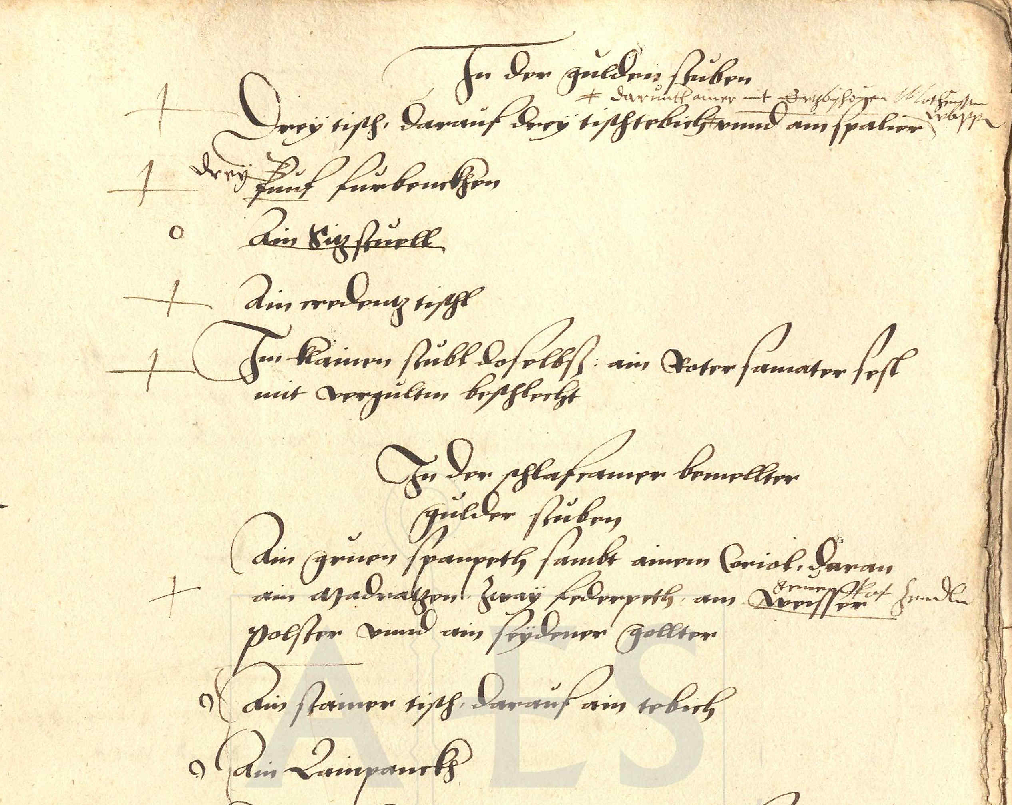
This research project focuses on the digital processing and linking of information from historical sources (up to 1816) and data from building research at Hohensalzburg and their transformation for integration into the Time Machine project. The aim is to bring together the various interdisciplinary research results from history, building research and architecture for the first time. The information obtained from numerous inventories, invoices and preserved furnishings, such as the tiled stove in the Golden Chamber, will be combined with building history research to create a digital room book and enable a new overall view of the development, furnishings and use of the rooms that goes beyond the representative wings of the building and considers the fortress as a place to live.

Funded by:

Projektwebsite: Hohensalzburg.digital

Methods and digital tools
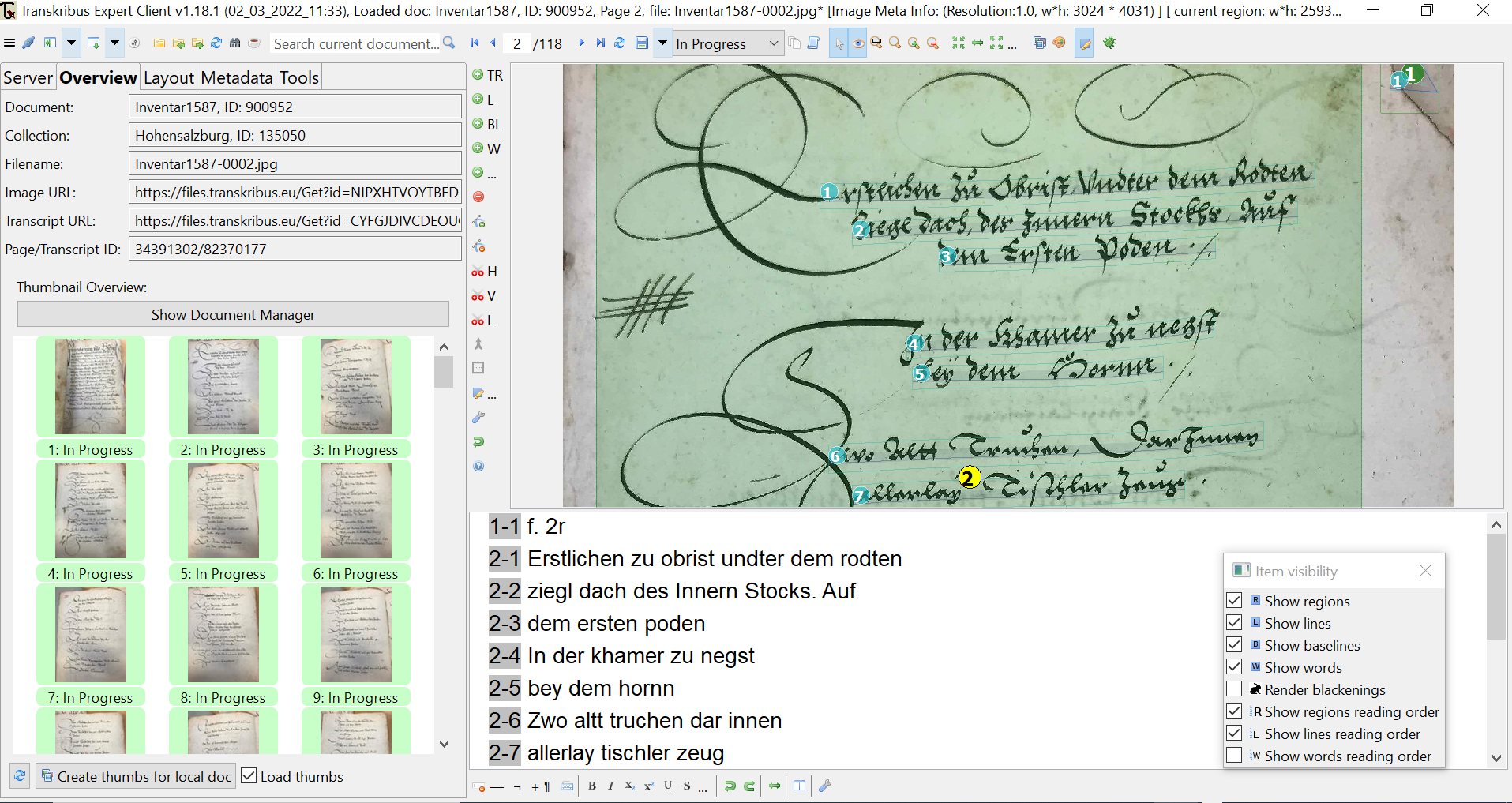
Hohensalzburg digital sees itself as a digital cultural heritage project. This requires the methodological instruments of interdisciplinary historical studies, as practised at the IZMF, as well as digital technologies and tools developed by computer science. IMAREAL contributes its expertise at the interface between digital data indexing in the field of material culture and systematic research into the significance of objects. For the digital indexing of written sources, the Transkribus software is used, with which digitised sources can be stored, automatically transcribed, semantically annotated and exported in various data formats (in particular XML as the standard format for long-term archiving). Early views and photographs of interiors are also integrated, as well as individual items of furnishings from the building, such as the unique tiled stove. A data model based on a graph database that has already been developed and tested in practice will be used to record the visual media.
At the same time, in cooperation with the fortress administration of Hohensalzburg, research into the history of construction and ownership is being digitally recorded, modelled and spatial data processed. Building Information Modelling (BIM) approaches are used to enrich spatial information with object-related data for the documentation, analysis and communication of information on rooms. Existing planning documents and 3D models are prepared for representation and archiving in the graph database as a digital “room book” and enriched with data on written and image sources as well as artefacts. The inventory data from Hohensalzburg digital are also incorporated into the project DiscoThings, which links visual and textual sources on material culture in a shared knowledge graph.