


PROJECT OVERVIEW
PROJECT DETAILS
- Category Research Approaches
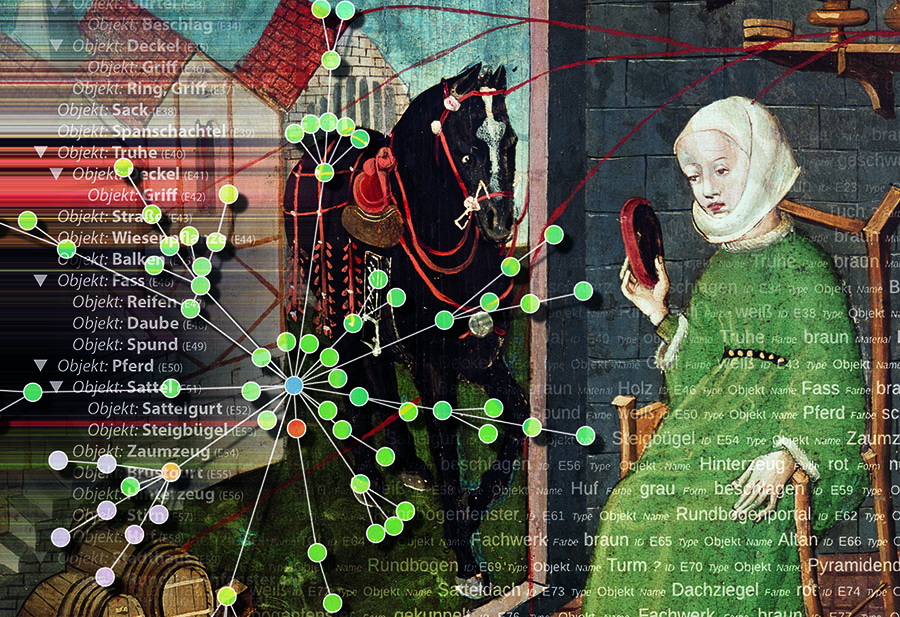
The Object Links research approach does not analyse the objects themselves, but the links between the objects and between objects and people. An object that is part of our environment and plays a role in our actions does not always and everywhere have the same importance or effect. Let’s take for example a chair: you can sit on it, but also stand on it to reach something higher up. In the latter case, the object primarily defined as seating furniture converts to a device with the function of a stepladder or the like. The meanings of an object depend on the situations in which it occurs or is used, i.e. on the links it has to other objects, to rooms and to people. These links that make a “thing” observable and determinable as an object are called object links, forming a discrete category of material culture.
The questions dealing with the history of objects cannot be limited to what the objects looked like, how they were created, spread and used and how meaning was ascribed to them. You can also ask completely different questions: How do objects contribute to the course of history? What is their meaning in a cultural and humanistic horizon that extends beyond the setting in which they were actually used? What role do they play in a history of knowledge? How can you describe their corresponding epistemological status?
From the perspective of cultural studies, there is no such thing as “the one and only object” with pinned down meanings (in contrast to the ontological perspective). It is only captured where it becomes observable as “objectum” (thing presented to the mind) in its links, where it forms part in constellations and practices and where these links ascribe meanings to the object. The Object Linksresearch approach therefore does not primarily analyse the objects themselves, but the links between the objects and between objects and people. Depending on the point of observation, acting people and objects (to some degree also as actors and agents) as well as objects and objects form distinct object communities established through these links, i.e. objects link. The basic thesis is that the types of links in the object communities create the respective form of appearance, the meaning and effect of the objects, which in turn makes the links themselves substantial elements of material culture. Links and practices are interactive as practices determine how the objects are linked in the object communities, and the existing links in turn determine the practices. Different types, characteristics and effects of these links manifest themselves in the structures of object communities.
Das Konzept der Object Links erlaubt es, die Bedeutung der Dinge in der Geschichte und für die Kulturen genauer in den Blick zu nehmen. Wie äußert sich die Bindung zu Objekten im Gedächtnis und in der Erinnerung? Welche Funktionen haben Dinge bei der Etablierung und Gestaltung sozialer Gefüge sowie als Medien der Kommunikation und Repräsentation? Wie interagieren Objekte miteinander und wie konstituiert diese Interaktion den Raum? Die Vernetzung von Objekten untereinander sowie von Objekten und menschlichen Akteuren im topografischen und sozialen Raum kann in verschiedenen Größenordnungen untersucht werden. „Objektensembles“ etwa werden durch die Analyse von Ausstattungselementen, baulicher Anordnung und schriftlichen Dokumenten in profanen und sakralen Räumen fassbar. Objektbeziehungen von Individuen oder Personengruppen werden beispielsweise durch Stiftungen an geistliche Institutionen oder in der Geschenkkultur sichtbar. Die Bedeutung von Bildern ändert sich, wenn sie in neue Kontexte eintreten und neue Objektbeziehungen eingehen. Ein wichtiger Schlüsselbegriff ist daher die Objektbiographie, innerhalb deren ein bestimmtes Ding immer wieder zu einem neu definierten Objekt werden kann. Erste Ergebnisse zu diesen Fragestellungen haben wir in unserem aktuellen Buch Object Links – Dinge in Beziehung formuliert.
Die Basis für die Forschungsperspektive Object links bildet die Dokumentation und Kontextualisierung von Objekten, die am IMAREAL quellen- und disziplinenübergreifend betrieben werden und damit zur Grundlagenforschung des Instituts gehören. Die auf die jeweiligen Teilprojekte zugeschnittenen Visualisierungen (z.B. digitale Modelle von bildlichen Räumen) spielen sowohl als Forschungstools als auch als Mittel einer adäquaten Präsentation der Forschungsergebnisse eine zentrale Rolle. Eng damit verbunden ist die kontinuierliche Weiterentwicklung der vorhandenen Ressourcen und Kompetenzen im Bereich der Digital Humanities am IMAREAL.
Object Links
Welche Aufschlüsse ermöglichen Forschungen, die die Verbindungen zwischen Objekten sowie zwischen Objekten und Menschen in den Blick nehmen? Antworten auf diese Frage bietet der erste Band der Reihe „formate – Forschungen zur Materiellen Kultur“.