


PROJECT OVERVIEW
PROJECT DETAILS
- Category Digital Humanities
- Project duration : 2023 – ongoing
- Project leaders : Isabella Nicka, Peter Färberböck
- Project team member : Miriam Landkammer
- Technical implementation : Complement
- Consulting : DHCraft
DiscoThings
DiscoThings – Discovery of Things links data on the material culture of the Middle Ages and the early modern period from different types of sources in a shared knowledge graph. Images, inventories and account books, which are recorded at IMAREAL in separate databases, are thus to be searchable together in a single query for the first time – even without knowledge of query languages such as SPARQL.
DiscoThings is currently in the proof-of-concept phase. A publicly accessible application is not yet available.
Connecting sources
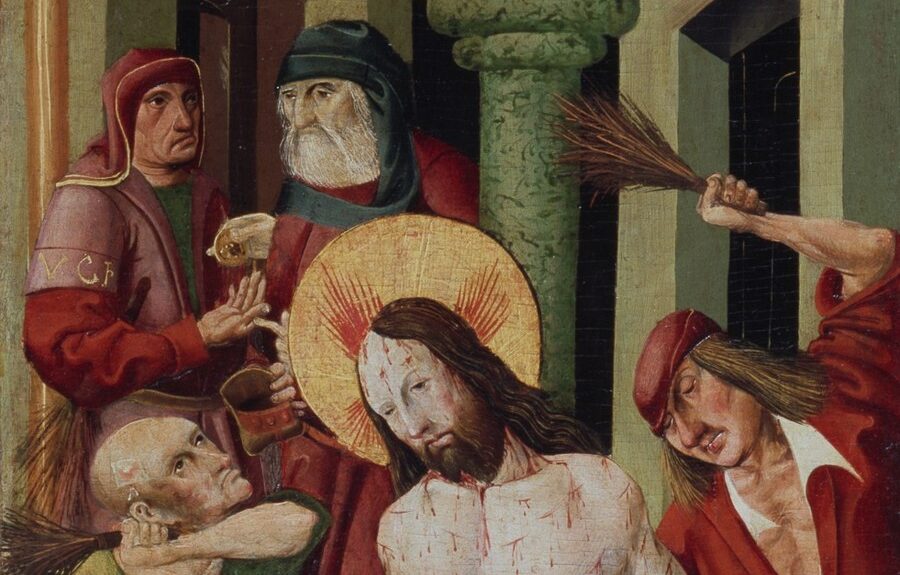
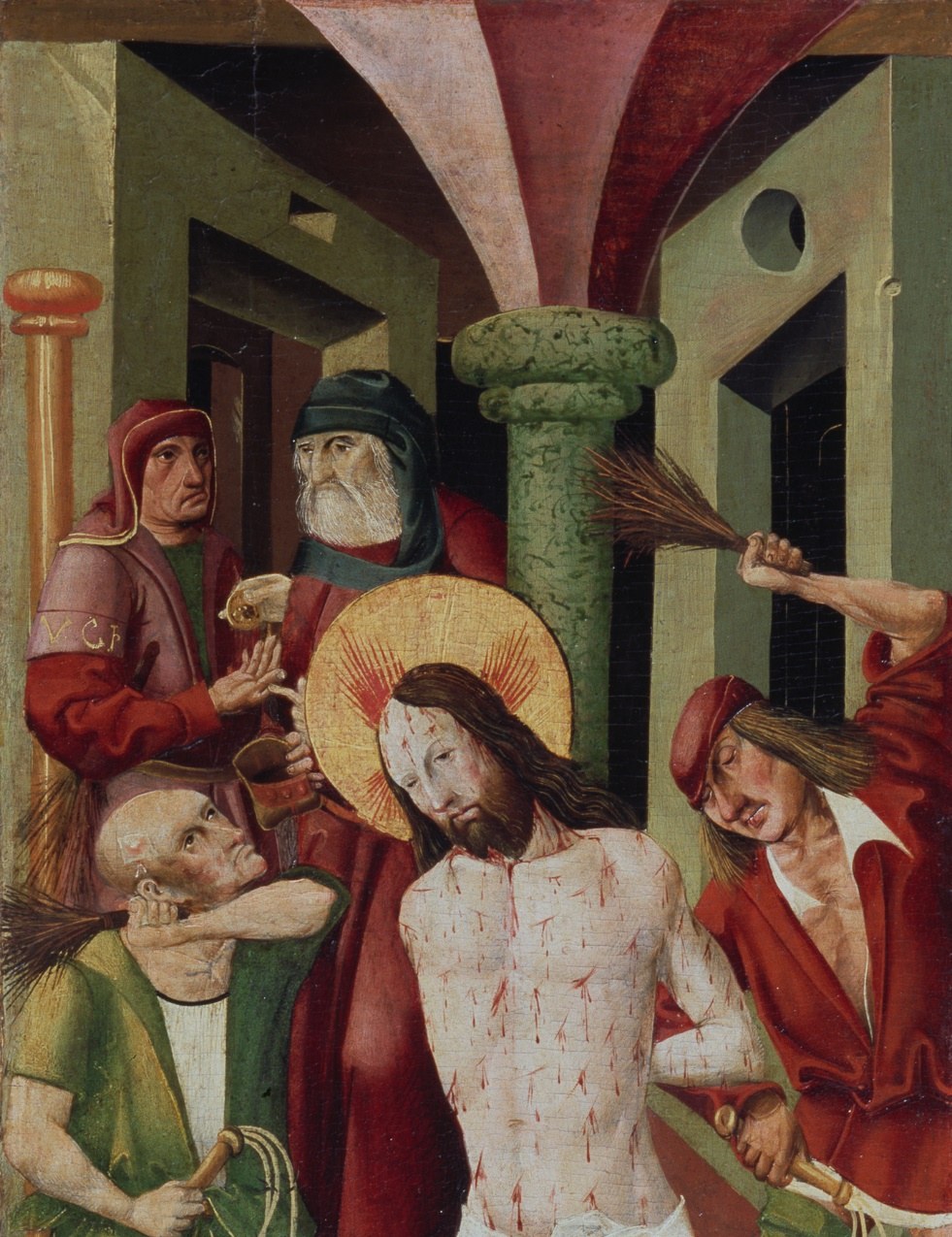
On which garments, accessories and other objects is fur depicted in medieval images? Which objects made of fur are listed in late medieval and early modern castle inventories? And where does the material appear in account books – with which qualities, terms and prices? Until now, researchers had to query several databases separately and do the work of linking the different types of sources themselves.
DiscoThings brings these holdings together. In its first stage, the data basis consists of the image database REALonline and the ITEM platform with its databases ITEM/inventories on historical inventories and ITEM/accounts on account books; in addition, there are the inventory data from the project Hohensalzburg Digital. Together, these comprise more than 22,400 visual media with around 238,000 recorded objects and, so far, 32 inventories with around 12,700 listed objects. The doctoral project Wearables by Anna Vierlinger, which examines clothing, accessories and textiles in account books of double monasteries of the early 16th century, is also incorporated. Since all databases are based on the REALonline recording schema, their data models are compatible.
Image and text complement each other without merely illustrating one another: written sources name who owned objects and materials, where they were found and what they cost; visual sources show what they looked like according to contemporary depictions and in which contexts they were represented. The joint query opens up new, interdisciplinary research questions – and also reveals how the types of sources differ.
Linking thesauri
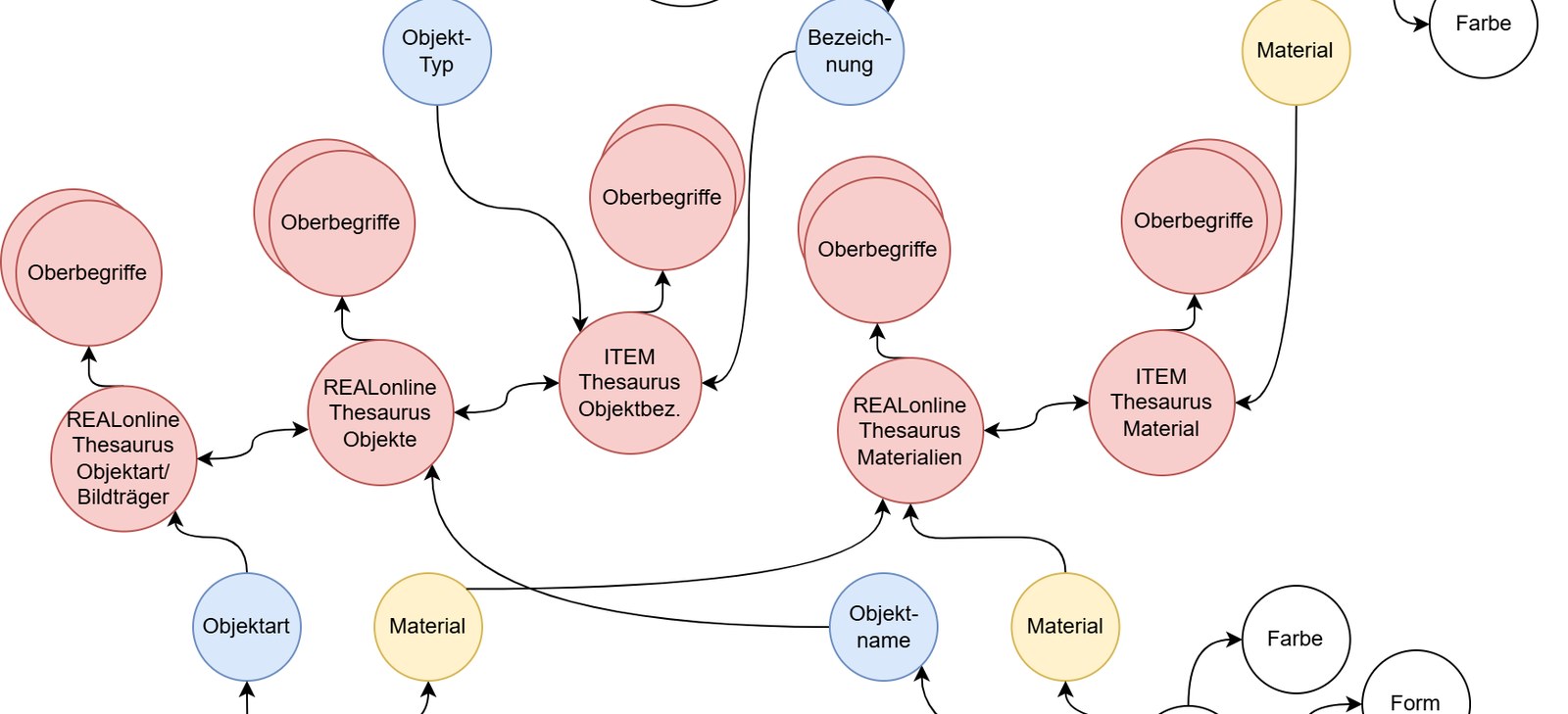
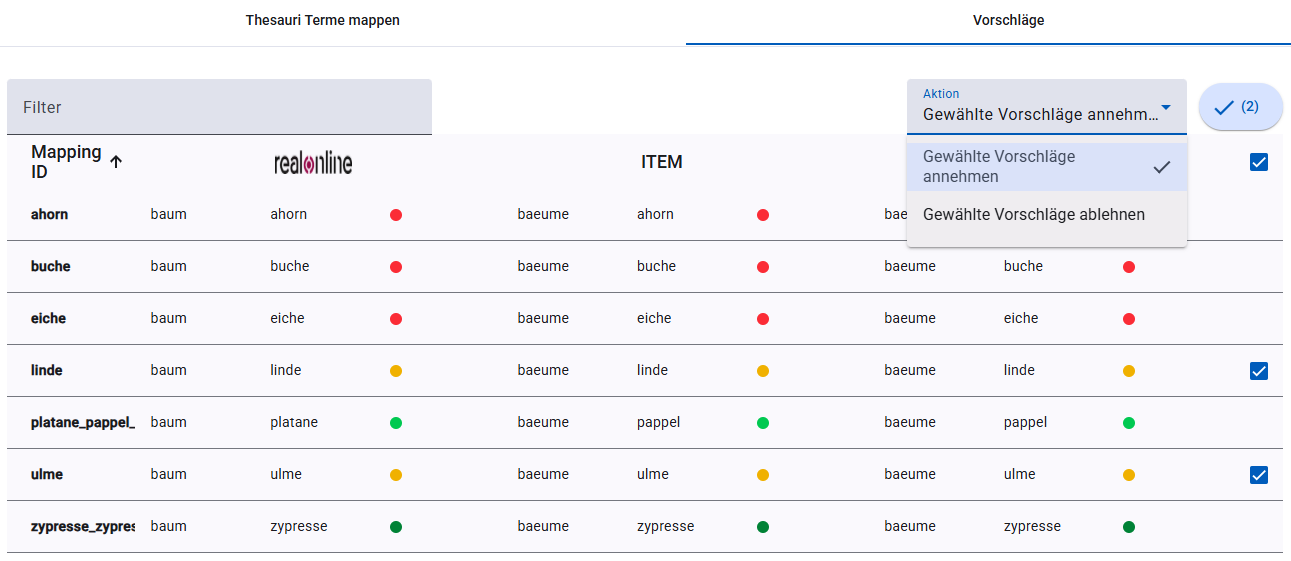
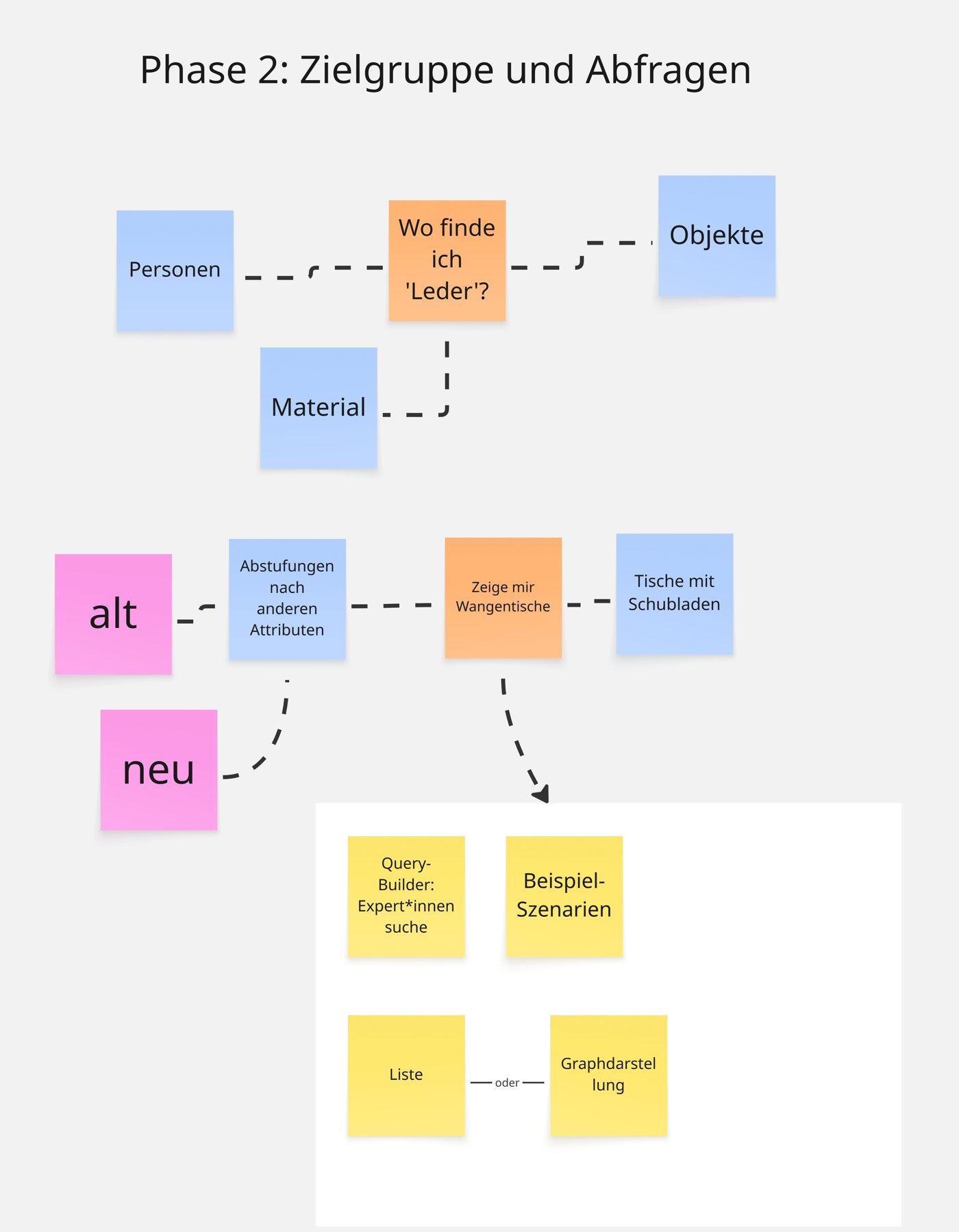
For a “Fazolett” from an inventory and a “Taschentuch” (handkerchief) depicted on a panel painting to be found together, the vocabularies of the individual databases have to be related to one another. The thesauri of REALonline and ITEM are similar in structure, but differ in their level of detail depending on the type of source. The ITEM thesaurus, for example, contains 16 kinds of fur such as wolf, calf or cow, while REALonline includes, among others, leopard skin and the more general term fur.
For this task, a dedicated mapping tool was developed within the project. The web application makes it possible to systematically create and manage concordances between two or more thesauri – as an exact match, as a related term or as a hierarchical (broader/narrower) relation according to the W3C standard SKOS. A suggestion service supports this work, and the linked vocabularies are exported in RDF. As a next step, an overarching ontology is planned to make the knowledge graph as a whole conveniently queryable.
Operating knowledge graphs sustainably
From the data, which have so far been available as a labeled property graph (Neo4j), an RDF-based, interoperable knowledge graph with around 15 million triples is being created. It is already enriched with authority data and Linked Open Data, and this enrichment will be expanded further. In the medium term, the data and their connections are also to be made usable for research and the cultural heritage sector.
How knowledge graphs of this size can be operated was investigated as a test case in the inter-university infrastructure project DHInfra. DiscoThings runs as a proof of concept on the VM cluster of the Database Research Group at the University of Salzburg using the open-source framework Apache Jena Fuseki. The results are presented in a post on the blog “Digital Humanities an der Universität Salzburg” (in German).
Queries without prior knowledge
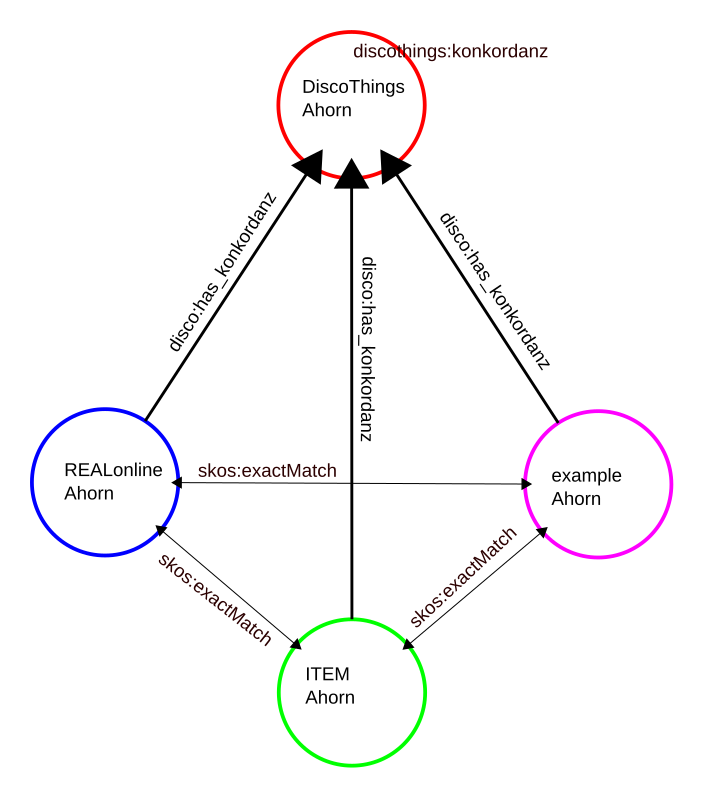
DiscoThings is intended to make the data accessible not only to experts. A frontend is planned through which users without knowledge of graph databases and query languages can obtain results: with a query builder, with sample scenarios and, in the medium term, with AI-assisted queries. The requirements were developed in May 2026 in a frontend workshop with the development partner Complement; they form the basis for further development.
Contact us!
If you have any questions about DiscoThings or are interested in a collaboration, please contact Isabella Nicka or Peter Färberböck.
Literature and talks
Peter Färberböck, Isabella Nicka: Dinge entdecken, Zusammenhänge finden: DiscoThings. Ein System zum Verbinden von Quellen zur materiellen Kultur, poster, Digital History 2026, Salzburg, 28 September – 1 October 2026.
Miriam Landkammer, Clemens Hafner, Peter Färberböck, Isabella Nicka: Der VM-Cluster als Infrastrukturangebot an der Universität Salzburg im Testszenario des Projekts „Discovery of Things“, in: Digital Humanities an der Universität Salzburg, 22 June 2026, doi: 10.58079/16fup.
Isabella Nicka, Peter Färberböck: Getting to the Bottom of Things. Leveraging Graphs for the Study of Material Culture in Medieval Images, talk in the Introduction to Digital Humanities Lecture Series, University of Vienna, 5 May 2026.
Elisabeth Gruber, Peter Färberböck: ITEM: Eine Schnittstelle realienkundlicher Daten aus historischen Textquellen, in: Das Mittelalter 30,1/2025, 113–129, doi: 10.17885/heiup.mial.2025.1.25124.
Isabella Nicka, Miriam Landkammer, Andreas Uhl, Michael Linortner, Johannes Schuiki: Annotating Images. A Prerequisite for Interdisciplinary Research in Medieval Studies, in: Das Mittelalter 30,1/2025, 90–122, doi: 10.17885/heiup.mial.2025.1.25123.
Isabella Nicka, Peter Färberböck: Alle Wege führen zu LLMs? Die RDF-Datenmodellierung am IMAREAL und die Zukunft, in: Digital Humanities an der Universität Salzburg, 2024, doi: 10.58079/12vc2.